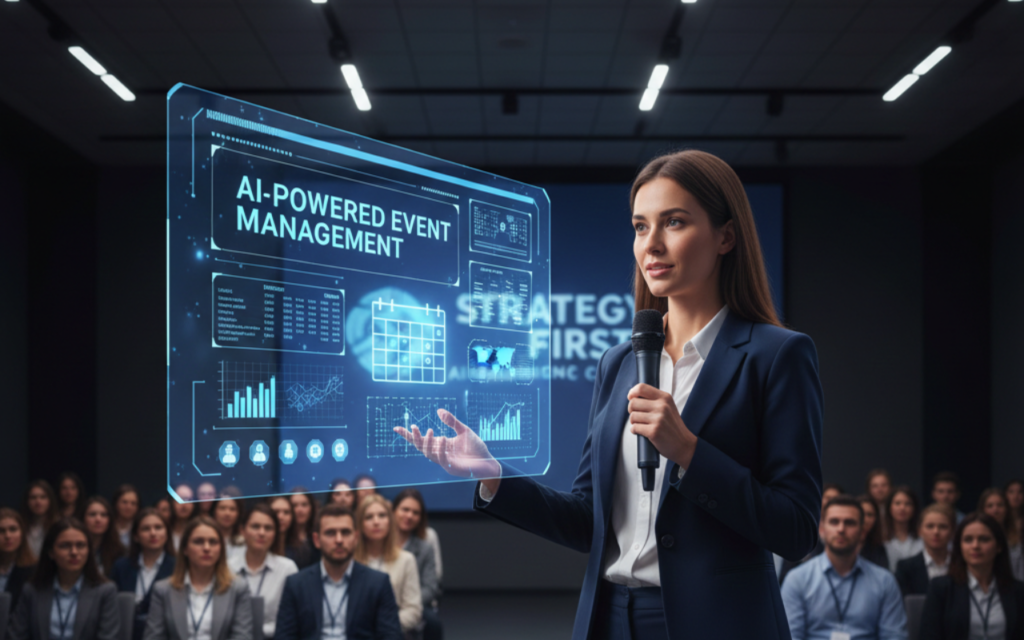
Change management for event planners isn’t just a skill — it’s a survival strategy. In the fast-paced world of corporate events, unexpected disruptions happen daily: a keynote speaker cancels last minute, budgets shift, or vendors fall through. For planners who master change management for event planners, these challenges become opportunities to deliver flawless, strategic outcomes instead of scrambling in crisis.
At Atlas Unchained, we see firsthand how businesses stumble when they treat change as a disruption rather than a structured data point. Planners who embrace change management for event planners consistently outperform competitors — not because they avoid change, but because they plan for it.
If you’re waiting for the event industry to “settle down” before you can finally plan a “normal” meeting, you’re already behind. In 2026, the most successful corporate meeting and event planners are those with robust systems, AI integration, and strategic frameworks, not just perfect checklists.
Why Change Management Matters in Event Planning
Change management is a structured approach for preparing, supporting, and helping teams adapt when shifts occur. In corporate contexts, it’s widely recognized as essential for transitions in technology, processes, and organizational priorities (Institute of Project Management).
In events, change is not a bug — it’s a feature. Planners who implement change management for event planners systematically can:
- Reduce stress across internal teams
- Minimize revenue loss from disruptions
- Increase client trust and satisfaction
- Ensure smoother, more predictable attendee experiences
- Improve ROI for every event
Whether you’re developing a corporate event strategy, leveraging AI for event management, or implementing business transformation systems, mastering change management for event planners is critical.
The “Strategy First” Framework: Change is a Data Point, Not a Disaster
Most event planners are trapped in logistics-first thinking: timelines, vendor bookings, and checklists. When something goes wrong, panic ensues because logistics alone cannot guide strategic decision-making.
Our Strategy First framework flips the paradigm.
Plan for volatility before it becomes a crisis.
Instead of asking, “What do we do now?”, your plan already has the answers — turning potential disasters into strategic pivots.
1. Architecting the Pivot Protocol
A Pivot Protocol is a predefined response plan tied to specific change triggers. Think of it as an event’s “emergency manual” that’s strategic, not panicked.
Example:
- If the keynote speaker cancels, then follow your “Speaker Disruption Protocol”:
- Notify stakeholders with prewritten messaging
- Deploy vetted backup speakers
- Adjust the agenda and update digital signage
Actionable Tip: Build a Change Matrix that outlines:
- Disruption type (budget cuts, venue changes, weather, tech failure)
- Strategic priority affected
- Preapproved response actions
- Communication trigger points
By documenting “If X happens → do Y,” you eliminate hours of debate when every minute counts.
2. Decoupling Strategy from Logistics
A common pitfall is conflating strategy with logistics.
- Strategy is the desired outcome — e.g., executive alignment
- Logistics are the tools — e.g., venue, catering, schedule
If an outdoor team-building session is rained out, the strategy hasn’t changed; only the logistics need adjustment.
By keeping strategy at the forefront, planners can pivot logistics without losing the event’s value, making change management for event planners more effective and stress-free.
Leveraging AI for Agility: The 2026 Edge
Manual spreadsheets and endless email chains are a relic. In 2026, AI for event management is essential to survive disruption. AI transforms reactive planning into predictive orchestration, letting planners focus on strategic tasks instead of operational noise.
According to industry research, AI-driven tools improve event planning efficiency by up to 40% and can automate registration, communication, and contingency planning (Zipdo.co AI Statistics).
Automated Contingency Planning
Imagine an AI platform that:
- Monitors contract deadlines and vendor reliability
- Predicts weather risks and attendance patterns
- Suggests alternative vendors and schedules automatically
When risk thresholds are triggered, the system can:
- Notify stakeholders instantly
- Draft preapproved emails
- Adjust timelines and budgets in real time
Automation reduces manual stress and preserves planners’ cognitive bandwidth for high-value decision-making.
AI-Driven Analytics & Decision Support
AI is also your strategic compass. These systems can:
- Analyze past attendee behavior to predict engagement
- Recommend session changes or theme adjustments
- Forecast ROI impact of mid-event pivots
For example, a planner using AI can decide whether shifting a workshop theme will enhance engagement or risk dissatisfaction — backed by data, not guesswork.
Enhanced Personalization and Engagement
AI also allows for hyper-personalized experiences:
- Tailored session recommendations for attendees
- Custom agendas based on preferences
- Targeted reminders for important sessions
These improvements directly affect attendee satisfaction and ROI, crucial metrics for corporate events (Institute of AI Studies).
Human-Centered Resilience: The People Side of Change
Systems are important, but events are human experiences. Change affects emotions, expectations, and relationships — from your team to corporate clients.
Mastering change management for event planners requires balancing systems with empathy.
Transparent Communication Systems
One common mistake is delayed communication. Waiting for the “perfect solution” creates panic.
The Status-Red communication loop solves this:
- Notify stakeholders immediately upon identifying a change
- Explain the process being used to resolve it
- Share frequent updates
Transparent communication reduces anxiety and builds trust. Use event apps, automated messaging, or digital signage to broadcast updates instantly.
Reducing Decision Fatigue
Change generates decisions. Too many leads to fatigue, and fatigue leads to errors.
Predefined protocols, AI-assisted workflows, and role-specific responsibilities free planners to focus on high-value strategic decisions, such as client interactions and creative problem-solving.
Best Practices in Change Management
- Plan Ahead – Define success and measurement metrics before disruptions occur
- Communicate Often – Share updates, even if the solution isn’t finalized
- Engage Stakeholders – Include clients and vendors in feedback loops
- Train and Empower Teams – Equip staff to make decisions confidently
- Audit and Iterate – Review past pivots to refine your Pivot Protocol
People Also Ask
What is change management in event planning?
Change management in event planning is a structured approach to prepare for and handle shifts in strategy or execution, moving planners from reactive firefighting to proactive systems-based management.
How do you handle last-minute event changes?
Use a pre-established Pivot Protocol supported by automated notifications and backup plans to execute changes smoothly. (Protectivity)
Why is strategy more important than logistics in event planning?
Strategy defines the desired outcome; logistics are the tools. By focusing on strategy, planners can swap logistics without compromising results.
FAQs: Navigating the Shift
Q: Can small businesses implement these systems without a massive budget?
A: Yes. Start small with affordable automation tools like Zapier, subscription AI platforms, and clear frameworks for corporate event strategy.
Q: What’s the first step to becoming an agile planner?
A: Audit your last three crisis events. Track time spent discussing versus executing solutions. If discussion dominates, your system needs adjustment.
Q: How does Atlas Unchained help?
A: We implement business transformation systems, AI integration, and communication frameworks that make change management for event planners seamless and measurable.
7 Pillars of Change-Ready Event Strategy
- Purpose-Driven Planning – Align events with measurable business outcomes
- Modular Logistics – Flexible building blocks that adapt quickly
- Automated Systems – Replace repetitive tasks with AI solutions
- Clear Communication Loops – Keep stakeholders informed
- Scenario Playbooks – Prepare for common disruptions
- Continuous Learning – Update protocols from past experience
- Human-First Culture – Support teams emotionally through change
Real-World Example
At a mid-size corporate summit, AI predicted low engagement for a breakout session. By swapping it with a more interactive workshop, attendance increased 30%, while attendee satisfaction rose — all without guesswork. (Agorify)
Stop Discussing. Start Architecting
Change is inevitable. You can be the planner running with a fire extinguisher — or the one who built a fireproof building.
At Atlas Unchained, we help businesses build systems that turn disruption into opportunity. With AI, strategy, and resilient frameworks, your events will succeed even in unpredictable environments.
Ready to master change management for event planners?
Schedule Your Consultation Today