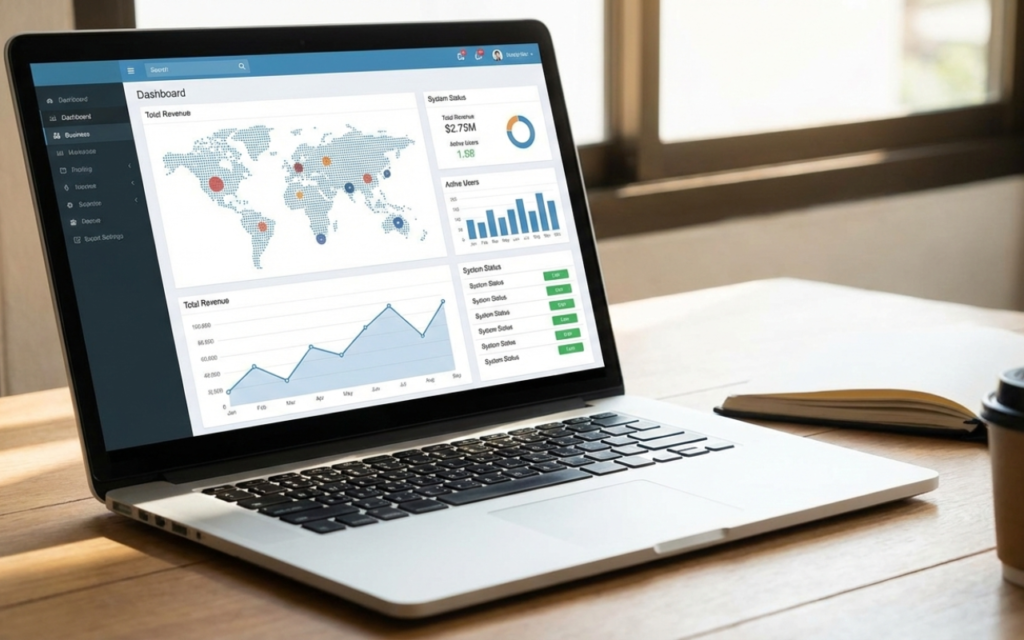
In today’s fast-paced business world, AI for data insights is no longer a luxury — it’s a necessity. CIOs and business leaders are sitting on mountains of data from customer interactions, website analytics, social media, and sales records, but without AI, that information often goes unused. Data is often called the “new oil,” yet raw data alone doesn’t drive decisions. AI for data insights transforms this raw information into actionable strategies, helping businesses predict trends, optimize operations, and make smarter, faster decisions.
Most small to mid-sized businesses (SMBs) struggle with data-driven decision making, feeling overwhelmed by spreadsheets and reports but starving for meaningful insights. At Atlas Unchained, we believe that leveraging AI shouldn’t be complicated or expensive. With the right approach, even SMBs can harness AI to unlock growth opportunities and make data work for them.
In this guide, we’ll walk through how forward-thinking CIOs are using AI today — from predictive analytics to real-world applications — and how you can apply these strategies to your own business.
From Hindsight to Foresight: The AI Advantage
Traditionally, business intelligence (BI) has been about looking in the rearview mirror. You check last month’s sales report to see what happened. This is known as descriptive analytics. While helpful, it doesn’t give you a competitive edge.
AI transforms this approach by moving businesses into predictive and prescriptive analytics, providing foresight and actionable recommendations.
1. Predictive Analytics: Anticipate What Will Happen
AI algorithms can analyze historical patterns to forecast future trends. For example:
- A local service provider can predict seasonal spikes in demand before they happen.
- An e-commerce business can anticipate which products are likely to go viral during a promotional campaign.
- Healthcare practices can forecast patient volume and optimize staffing accordingly.
By anticipating trends, companies can optimize staffing, inventory, and marketing spend, turning reactive business decisions into proactive growth strategies.
Practical Tip: Start by identifying one business area where forecasting could have an immediate impact—like predicting the next best-selling product—and implement a small AI model to test the results.
2. Prescriptive Analytics: Decide What You Should Do
The real game-changer comes when AI doesn’t just predict trends but prescribes actions. For example:
- If sales might dip in March, AI can suggest a targeted re-engagement campaign for “lost” customers in February.
- AI can recommend budget reallocation across digital marketing channels based on predicted ROI.
- Predictive maintenance in manufacturing can prevent equipment failures by recommending specific interventions before problems occur.
This transforms data-driven decision-making from a passive activity into a strategic growth engine.
Industry Insight: Gartner predicts that by 2026, 75% of organizations will shift from descriptive to predictive and prescriptive analytics, meaning businesses that adopt early will gain a significant competitive advantage.
Automating the “Grunt Work” of Data Cleaning
One of the biggest barriers to actionable insights is dirty data. Duplicate entries, inconsistent formatting, and missing values make manual analysis frustrating and error-prone.
CIOs are now using AI-powered data preparation tools to automate cleaning and ensure high-quality input for analytics. These tools can:
- Deduplicate Records: Automatically merge customer profiles across CRM, email marketing platforms, and support systems.
- Normalize Data: Recognize variations like “CA,” “Calif,” and “California” as the same entity.
- Fill Missing Values: Use machine learning to estimate missing information based on existing patterns.
By removing manual cleaning from the equation, teams can focus on strategy, not spreadsheets.
Pro Tip: AI-driven data cleaning tools can reduce human error by over 90%, ensuring reports are accurate and actionable. Tools like Trifacta or Alteryx make the process even more intuitive.
Expanding AI Applications Beyond the Basics
AI’s power isn’t limited to basic analytics. Forward-thinking CIOs leverage AI to solve complex challenges across the enterprise, unlocking business intelligence AI, and predictive analytics for SMBs.
1. Customer Sentiment Analysis
Instead of guessing how your customers feel, AI can analyze reviews, social media comments, and support tickets.
- AI identifies sentiment (positive, negative, neutral) and highlights recurring patterns.
- Negative reviews mentioning “slow response time” can be prioritized for immediate intervention.
- AI can also detect subtle trends, like customer frustration building around a specific product feature, before it impacts sales.
For tips on turning insights into actions, see our Business Consulting services.
For more insights on sentiment analysis, see Harvard Business Review: Using AI to Understand Customers.
2. Hyper-Personalized Marketing
AI analyzes individual behavior to deliver personalized campaigns that convert:
- Identify the best time to send emails for maximum engagement.
- Determine which products customers are most likely to purchase next.
- Set precise discount thresholds to drive purchases without unnecessary markdowns.
This moves businesses away from “spray-and-pray” marketing toward strategic, ROI-driven campaigns.
Example: A subscription-based service used AI to determine the optimal content type for each user, increasing retention by 18% in just three months.
Learn more about our SEO & Content Strategy services that integrate AI-driven personalization.
3. Inventory & Supply Chain Optimization
AI helps retailers and e-commerce businesses forecast demand and optimize supply chains:
- Analyze external factors such as weather, local events, and trend data alongside historical sales.
- Predict product demand fluctuations to prevent overstocking or stockouts.
- Automatically adjust reorder levels for best-selling items.
Industry Insight: According to McKinsey, AI-driven inventory management can reduce excess inventory costs by up to 20% while improving order fulfillment rates by 10–15%.
4. Fraud Detection and Risk Management
AI excels in detecting anomalies in complex datasets:
- Financial transactions can be analyzed in real-time to detect fraudulent activity.
- Insurance claims can be automatically flagged for further review based on patterns in historical data.
- SMBs can use AI to monitor internal operations for compliance risks.
This capability not only saves money but also protects brand reputation.
5. Employee Productivity and Workflow Optimization
AI isn’t just for customer-facing processes. It can also:
- Automate repetitive administrative tasks like scheduling, report generation, and email sorting.
- Identify workflow bottlenecks by analyzing internal communication patterns.
- Recommend staffing adjustments to improve efficiency during peak business hours.
By optimizing internal processes, AI indirectly boosts profitability and employee satisfaction.
Implementing AI for SMBs: Practical Guidelines
For small businesses, AI adoption can feel overwhelming—but it doesn’t have to be. Here’s a structured approach:
- Start Small: Identify a single pain point like customer churn, marketing ROI, or inventory inefficiency.
- Choose the Right Tools: Many SaaS platforms now have AI built in—CRMs, email marketing tools, analytics suites, or even AI APIs like OpenAI or DataRobot.
- Implement Quickly: Begin with a small pilot project. Measure results and iterate.
- Scale Gradually: Expand AI applications to other departments once ROI is clear.
- Monitor and Optimize: Use AI insights as guidance, not absolute rules. Combine AI with human judgment for maximum impact.
Pro Tip: Document results and processes early. This builds an internal AI playbook, reducing friction when expanding adoption across teams.
The Atlas Unchained Approach: Systems Over Theory
At Atlas Unchained, we prioritize impact over hype. AI is exciting, but what matters is whether it moves the needle for your business.
Our approach combines AI implementation for small businesses with proven frameworks for predictive analytics for SMBs and business intelligence AI. This ensures you don’t just gather data—you use it to grow.
- Actionable Insights: Stop relying on gut feelings. AI translates data into precise recommendations.
- Rapid Deployment: Our systems generate meaningful results within weeks, not months.
- Integration Across Platforms: CRM, email, analytics, and social media data converge for a unified view.
Whether you are in Orange County or anywhere else, the right AI systems can deliver quick wins while building a long-term strategy.
People Also Ask
How can AI improve data analysis?
AI processes massive datasets faster than humans, identifies hidden patterns, and delivers predictive forecasts. It removes bias and automates tedious tasks like data cleaning and organization.
What are the benefits of AI in business intelligence?
Key benefits include:
- Faster decision-making
- Accurate forecasting
- Personalized customer experiences
- Discovery of “dark data” that can drive revenue
Is AI for data insights expensive for small businesses?
No. Many SaaS tools now include built-in AI features. Affordable API-based solutions allow SMBs to access enterprise-grade insights at a fraction of the cost.
How do I start using AI for my business data?
Start with one pain point, test AI tools on it, implement insights, and gradually scale across departments.
Frequently Asked Questions (FAQ)
Q: Do I need a data scientist to use AI?
A: Not necessarily. Many no-code AI platforms allow business owners to upload data and receive insights via conversational interfaces. Partnering with a business consulting firm ensures alignment with growth goals.
Q: Is my data safe with AI?
A: Security is a top priority. Modern AI platforms provide enterprise-grade encryption and comply with GDPR and CCPA privacy regulations.
Q: How long does it take to see results?
A: With the right implementation, actionable insights can appear within weeks. Quick wins fund long-term strategy.
Q: Can AI help my business compete with larger competitors?
A: Absolutely. AI levels the playing field by enabling SMBs to access enterprise-level analytics and automation, giving them a strategic edge.
Next Steps: Unlock Your Data Today
Stop guessing and start growing. Whether you need a data-driven website or a comprehensive SEO & content strategy, AI-powered insights can transform your SMB.
Contact Trevor Kaak and the Atlas Unchained team today to start your digital transformation journey. The insights are already there—you just need the right tools to unlock them.